




Celebrating 100 Years of Certified Seed in Utah
A Legacy Great Basin Seed Is Proud to Be Part Of
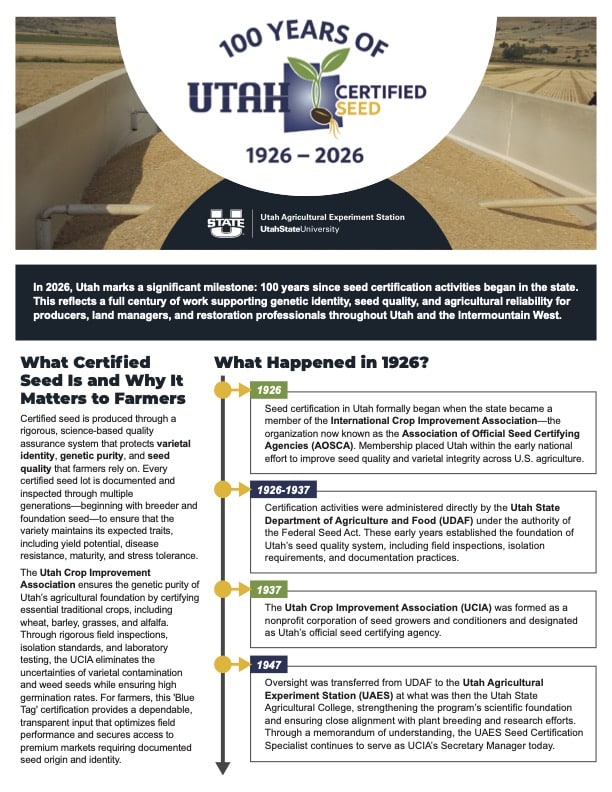
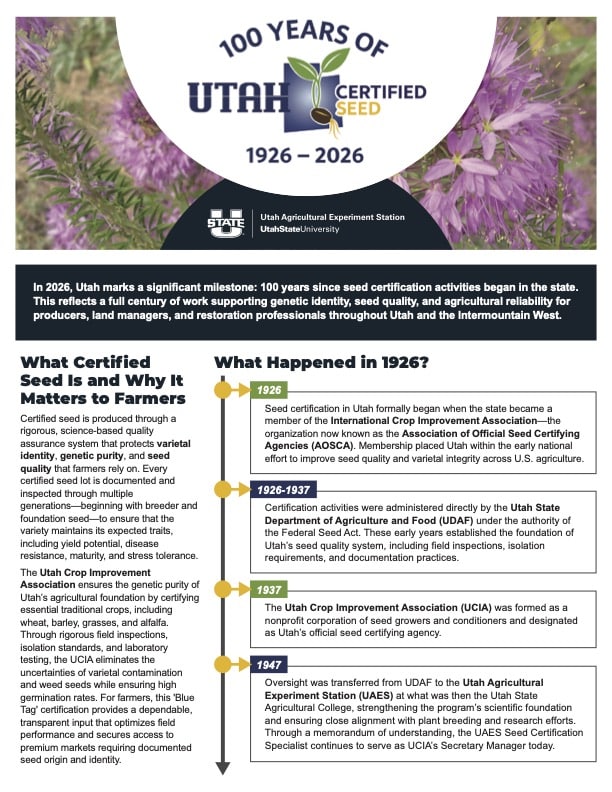
2026 marks a century of seed certification in the state of Utah. This significant milestone highlights a hundred years of commitment to seed quality, genetic integrity, and the trust that has been established between growers and those who rely on their crops in the Intermountain West.
Great Basin Seed is proud to have worked with the Utah Crop Improvement Association (UCIA) and the farmers who make certified seed possible for many decades. The cooperation between seed producers, certification agencies, and seed suppliers has helped create a system that farmers and land managers can trust.
For us, certified seed is more than a label. It is a commitment to delivering seed that performs.
What Does Certified Seed Mean?
Certified seed is created using a well-organized, science-driven method aimed at maintaining the unique characteristics and quality of the seeds. Each batch of seeds goes through a recorded procedure that starts with breeder and foundation seeds. The seeds are then inspected and tested in the field before being put into bags.
These steps help ensure the seed delivers the traits growers expect such as yield potential, disease resistance, weed content, germination rates, maturity timing, stress tolerance, etc.
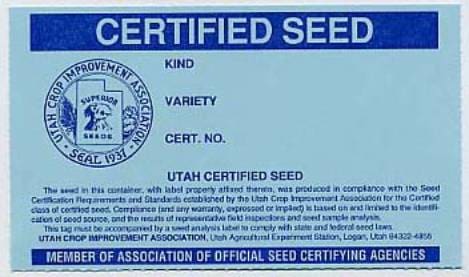
After a seed has successfully undergone this testing it receives its certification. The familiar blue certification tag is more than just a label. It signals that the seed has been inspected, documented, and verified.
A Century of Seed Certification in Utah
Seed certification in Utah officially began in 1926 when the state joined what is now known as the Association of Official Seed Certifying Agencies. From the beginning, the aim was clear: to enhance seed quality and maintain the integrity of crop varieties in American agriculture.
As time passed, the program expanded. Eventually, oversight was transferred to the Utah Agricultural Experiment Station, which helped to strengthen the link between seed certification and agricultural research.
Today, the Utah Crop Improvement Association carries on this important work. The organization works closely with growers, seed conditioners, and companies like Great Basin Seed to ensure seed quality throughout the region.
Working Together for Quality Seed
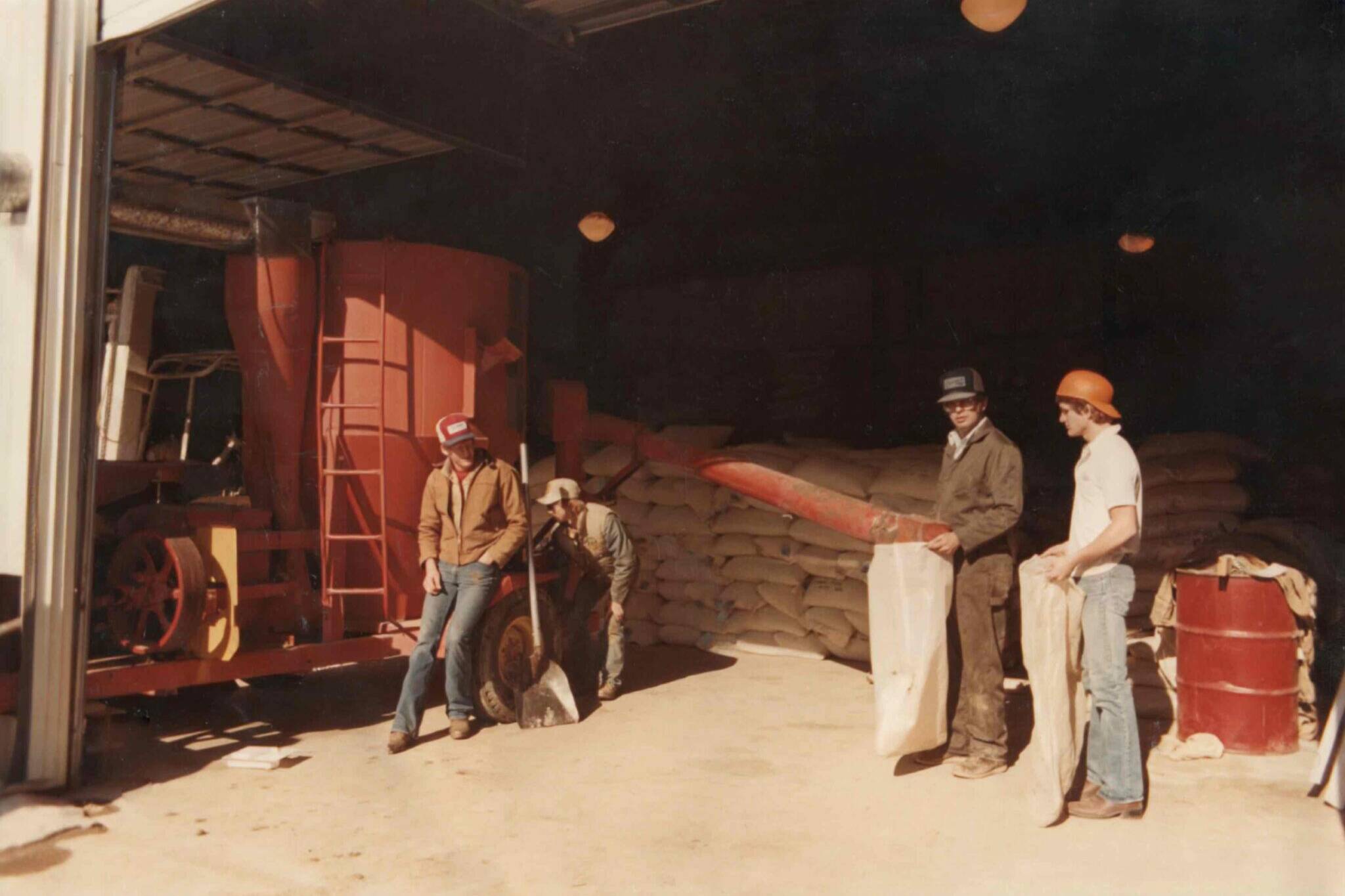
Great Basin Seed has worked with UCIA and certified seed growers throughout the Intermountain West for decades to provide high-quality seed. This process starts long before it gets to our warehouse. It starts with the farmers and groups in the Intermountain West that are committed to growing and checking certified seed.
Several groups worked together to make certified seed possible, including:
- Seed growers committed to maintaining varietal purity
- Field inspectors who monitor production fields
- Seed conditioning facilities that clean and prepare seed lots
- Plant breeders and researchers developing improved varieties
- Certification specialists who verify quality and documentation
Certification Expands Beyond Agriculture
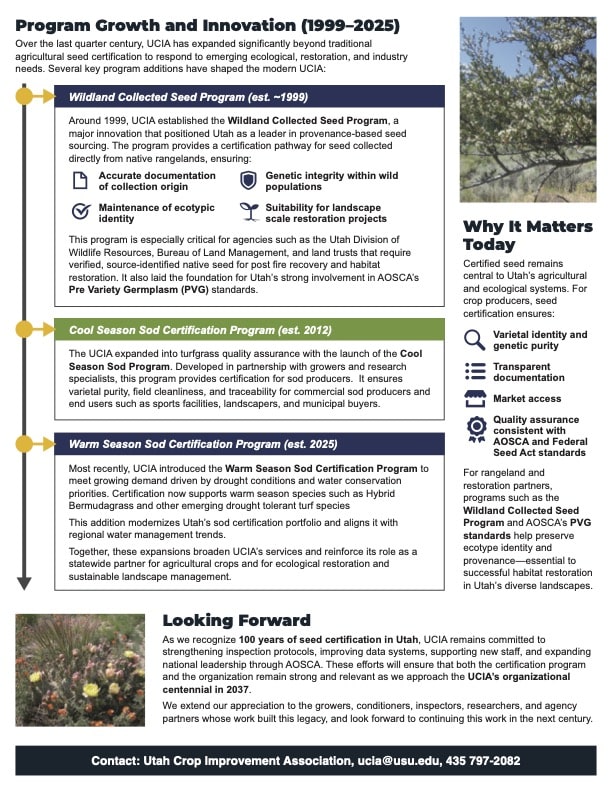
While certified seed began with traditional crops such as wheat, barley, alfalfa, and grasses, the program has expanded significantly in the past few decades.
As the needs of agriculture and land management evolved, new certification programs were developed to support restoration, turf, and drought-resilient landscapes.
Wildland Collected Seed Program
This program started in 1999 and made it possible for people to get certified for collecting native seeds directly from wildland ecosystems. It makes sure that:
- Accurate documentation of collection origin
- Maintenance of ecotypic identity
- Genetic integrity of native plant populations
- Suitability for large-scale restoration projects
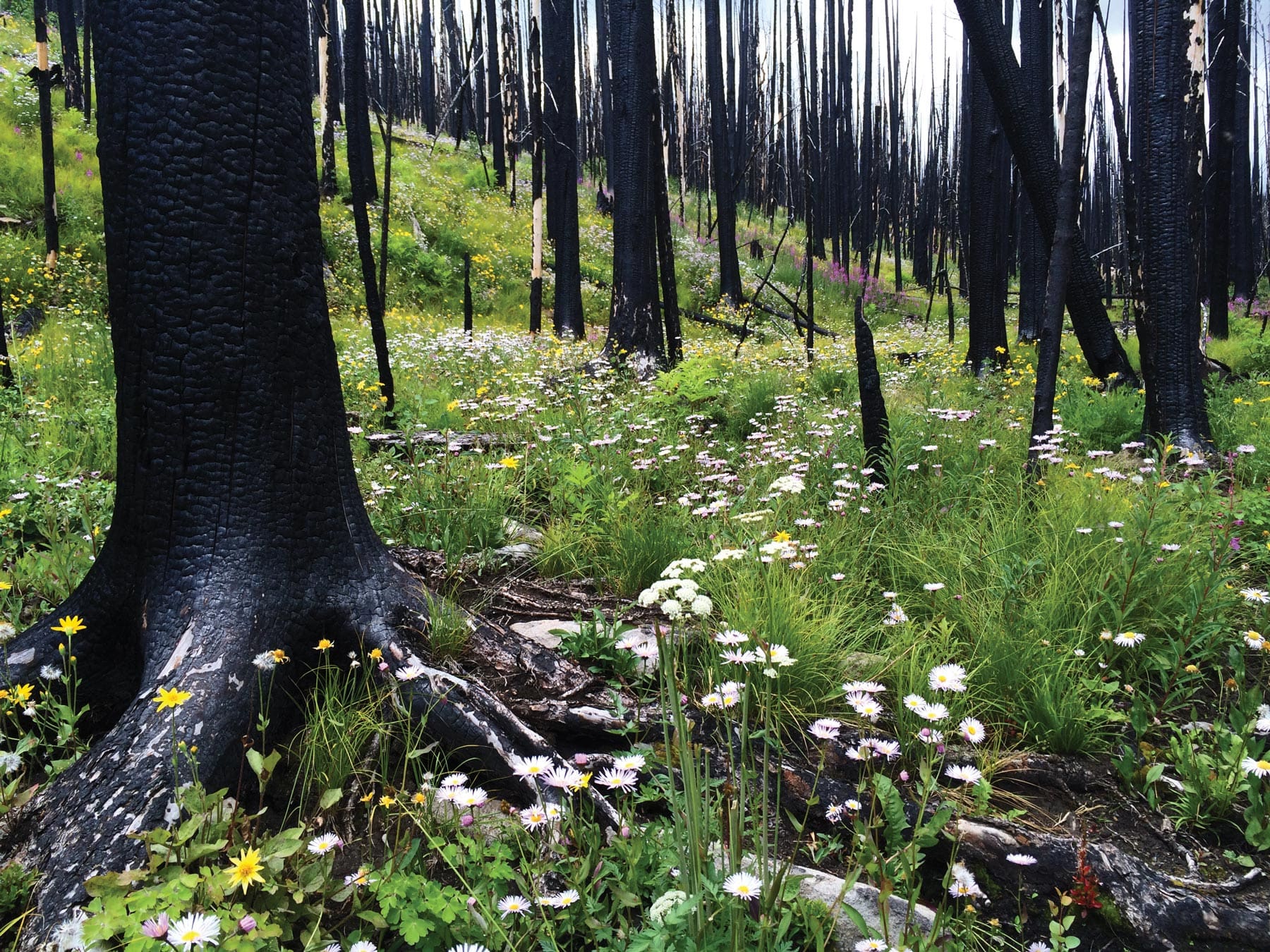
This program has become essential for agencies and organizations restoring habitat and rebuilding landscapes after wildfire.
Turfgrass Certification
UCIA later expanded into turfgrass quality assurance with the Cool Season Sod Certification Program, ensuring varietal purity and traceability for sod producers and landscape professionals.
Most recently, the Warm Season Sod Certification Program was introduced to support drought-tolerant turf species and help address growing water conservation needs in the region.
Why Certified Seed Still Matters
A century after its beginnings, seed certification remains fundamental to successful agriculture and land restoration.
For seed producers, certified seed provides the following:
- Verified varietal identity
- Reliable performance in the field
- Transparent documentation
- Access to premium markets requiring documented seed origin
Certification helps keep the identity of ecotypes and their ability to adapt to different regions, which are both important for the long-term success of ecosystems.
Looking Ahead
Reaching the 100 year mark is an important moment for Utah’s seed industry. It reflects the dedication of growers, inspectors, researchers, and organizations like UCIA that have worked for generations to protect seed quality and agricultural reliability.
At Great Basin Seed we are proud to be a part of that story.
We look forward to working with the Utah Crop Improvement Association and the many growers and partners who make certified seed possible. This will help make sure that the next century of farming and restoration in the West is built on the same foundation of quality and trust.