

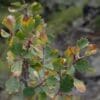
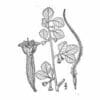
Alderleaf Mountain Mahogany
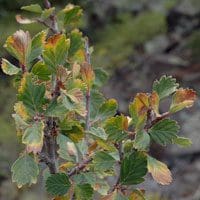 Price range: $6.00 through $48.00
 - Scientific name: Cercocarpus montanus
- AKA Alder Leaf Mountain Mahogany, Bush Mahogany
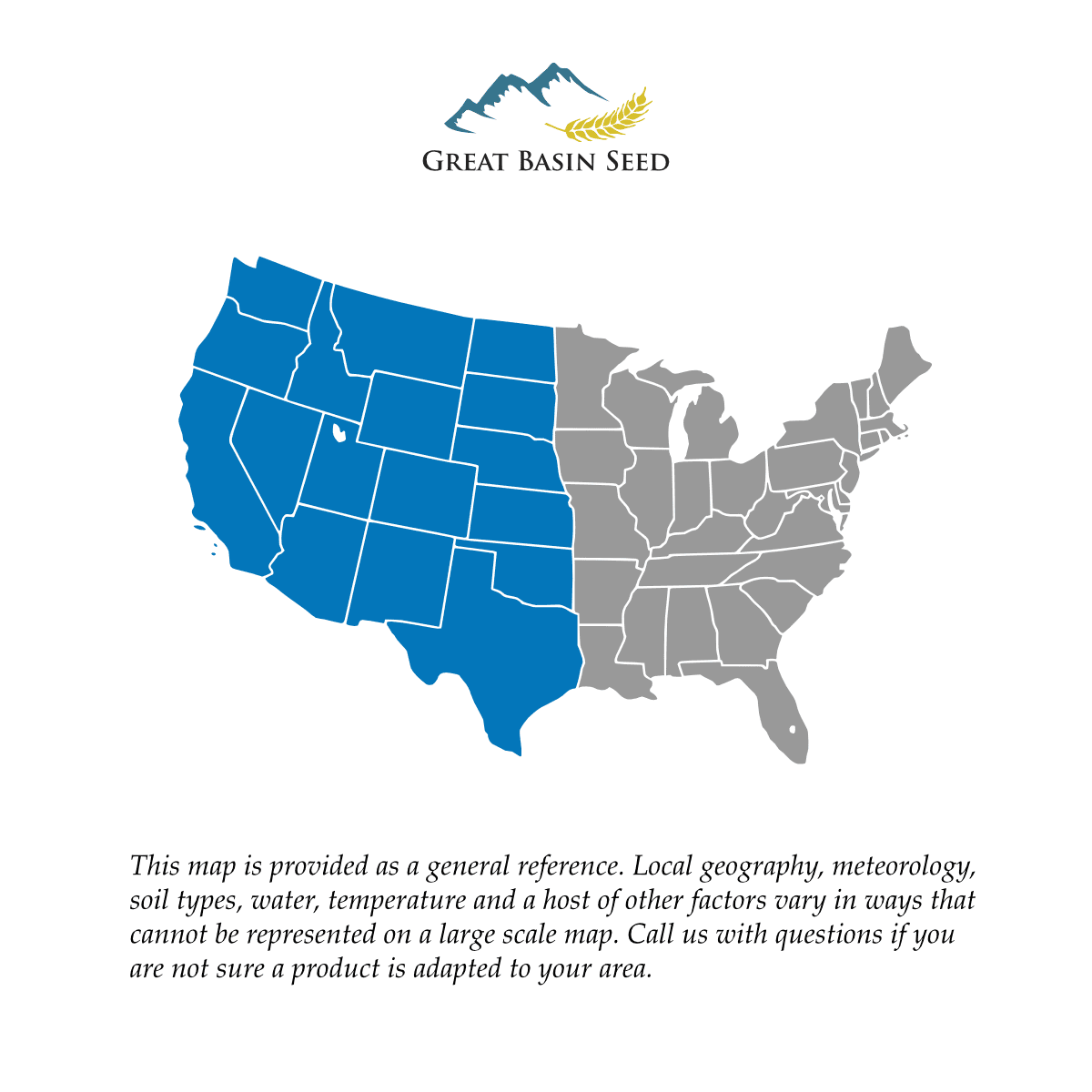
- Distributed throughout the western United States
- Occurs on rocky bluffs, mountainsides, canyon rimrock
- Likes rocky, gravelly, coarse thin, well drained soils
- Heat and drought tolerant
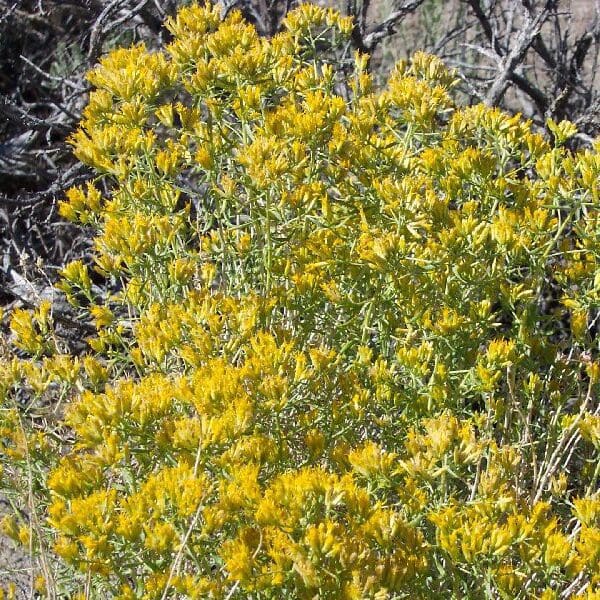
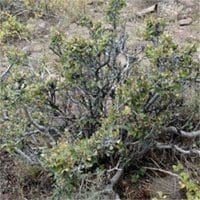
- Shrub-like, averaging 4-6 feet tall
- Excellent forage for cattle, sheep, and goats
Min. to Max. Annual Precipitation
144in.
Average Max. Height
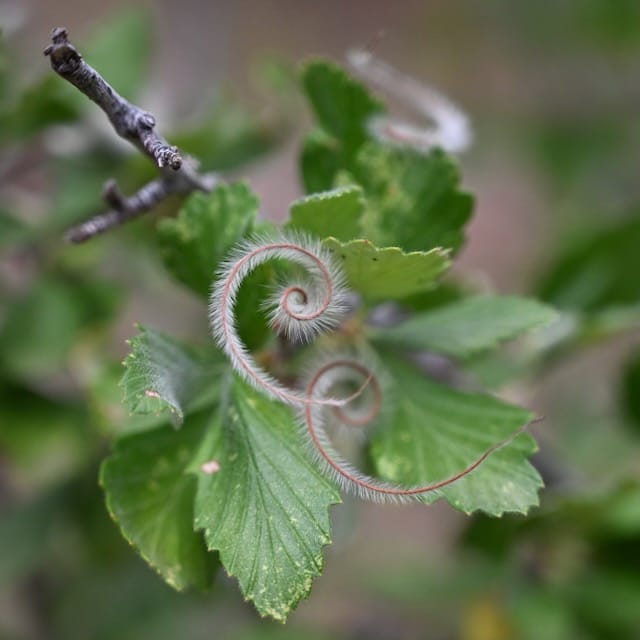
Alderleaf Mountain Mahogany (Cercocarpus montanus), also know as Birch Leaf Mahogany. It is heat and drought tolerant and is moderately tolerant of acid and alkali soils. Alderleaf Mountain Mahogany is very palatable and provides good to excellent forage for cattle, sheep, and goats. Alderleaf Mountain Mahogany is commonly found in swales where snow lays during the winter. It generally occurs at elevations between 4,000 and 7,000 feet, though it can be found as high at 10,000.
General Description:
Alderleaf Mountain Mahogany (Cercocarpus montanus), also know as Birch Leaf Mahogany. It is heat and drought tolerant and is moderately tolerant of acid and alkali soils. It is also somewhat shade tolerant, but grows better without an overgrowing forest canopy. Common names include “Bush” Mahogany, Birch Leaf Mahogany, Alder Leaf Mahogany. The names “Birch Leaf” and “Alder Leaf” are derived from the comparison to those two species who’s leaf edges are serrated.
Alderleaf Mahogany (Cercocarpus montanus) and Curl Leaf “Tree Mahogany” (Cercocarpus ledifolius) are related but do not generally share the same habitat. The leaves of ledifolius are thin and smooth edged while montanus are broad and serrated. Ledifolius grows more tree-like, reaching heights of 20 feet tall, while montanus is short and shrub-like averaging 4-6 feet tall.
American Indians used wood from Alderleaf to make tools and war clubs. Hopi Indians used the bark to make a reddish-brown dye for leather.
Uses:
Alderleaf Mountain Mahogany is very palatable and provides good to excellent forage for cattle, sheep, and goats. It is extremely valuable as winter browse for deer and bighorn sheep. The twigs are palatable yearlong and are grazed heavily. Alderleaf Mahogany is an important range and wildlife habitat improvement species and is a common ingredient in reclamation seed mixes.
Planting Conditions:
Alderleaf Mountain Mahogany is commonly found in swales where snow lays during the winter. It generally occurs at elevations between 4,000 and 7,000 feet, though it can be found as high at 10,000. Cercocarpus montanus is distributed throughout the western United States and occurs on rocky bluffs, mountainsides, rimrock, breaks, and in canyons and open woodlands in rocky, gravelly thin soils. It is most abundant on sunny sites with coarse, shallow, well-drained soils and is associated with Gambel oak, serviceberry, bitterbrush, big sagebrush. Alderleaf prefers full sun, at least 6 hours. It is drought tolerant once established.
Avoid planting in water logged soils as root rot can develop causing failure to establish. Don’t plant in areas that get lots of shade.
Establishment:
Make sure to plant in soils that are well draining. Avoid rich soils, plant in lean, rocky , sandy or gritty soils for best results. Mountain mahogany does requrie some seed prep before planting. One being a natural stratification process by planting in the late fall, early winter time. Broadcast right before snow flys.
If planting in spring do a cold-moist stratify for 60-90 days at 34-40 degrees. Don’t let the seeds dry out during this process. Once seeds are preped broadcast the seed on the surface of prepared ground. Don’t burry the seeds then water every 10-14 days to avoid the soil from dying our completely.
Year one the plant focuses on developing its root growth, not much growth happens above the ground.
Year two you will notice more growth. After year one stop watering and it will survive off of the annual precipitation.
Year three- five the plant has fully developed.
Seeding Rate:
1-2 pounds per acre
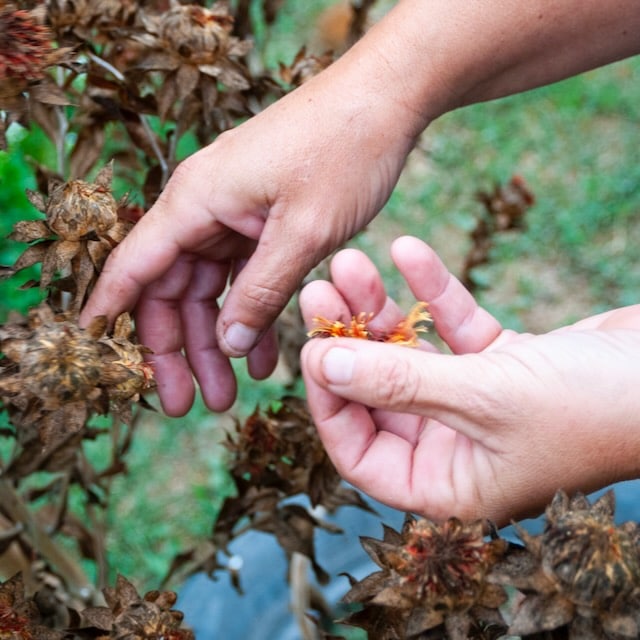
CERTIFIED HAND COLLECTED SEED
The process of hand collecting seed is millennia old. Seeds are gathered from native plant "stands" on public or private lands in the Intermountain West where these plants have lived for millions of years. Seed is gathered by hand stripping, cutting or "beating" the seed pods or capsules into a collection barrel. The process is laborious and time consuming. Collections may be as small as a few pounds to tens of thousands of pounds of material. Field collected material is conditioned in our state of the art facility down to pure seed that can be delivered to you!

THIS SPECIES IS HAND COLLECTED
Great Basin Seed has been hand collecting seeds since 1974
Helpful Links
Additional information about this product can be found on the academic websites linked below.
Synonyms
Many plants have more than one common and scientific name. We've listed a few of them below.
- Birchleaf Mountain Mahogany
- Cercocarpus montanus
- ‘Bush’ Mahogany
- Birchleaf Mahogany
- True Mountain Mahogany