






‘Mathilde’ Perennial Ryegrass
- Excellent forage quality: Selected for livestock forage production.
- Dense growth: Combines tetraploid forage characteristics with a dense stand.
- Good persistence: Suited to long-term pasture mixtures and temporary grassland.
- Improved winter hardiness: Identified by DLF as a variety strength.
- Versatile forage use: Suitable for pasture, hay, and silage.
- 5 pound minimum quantity
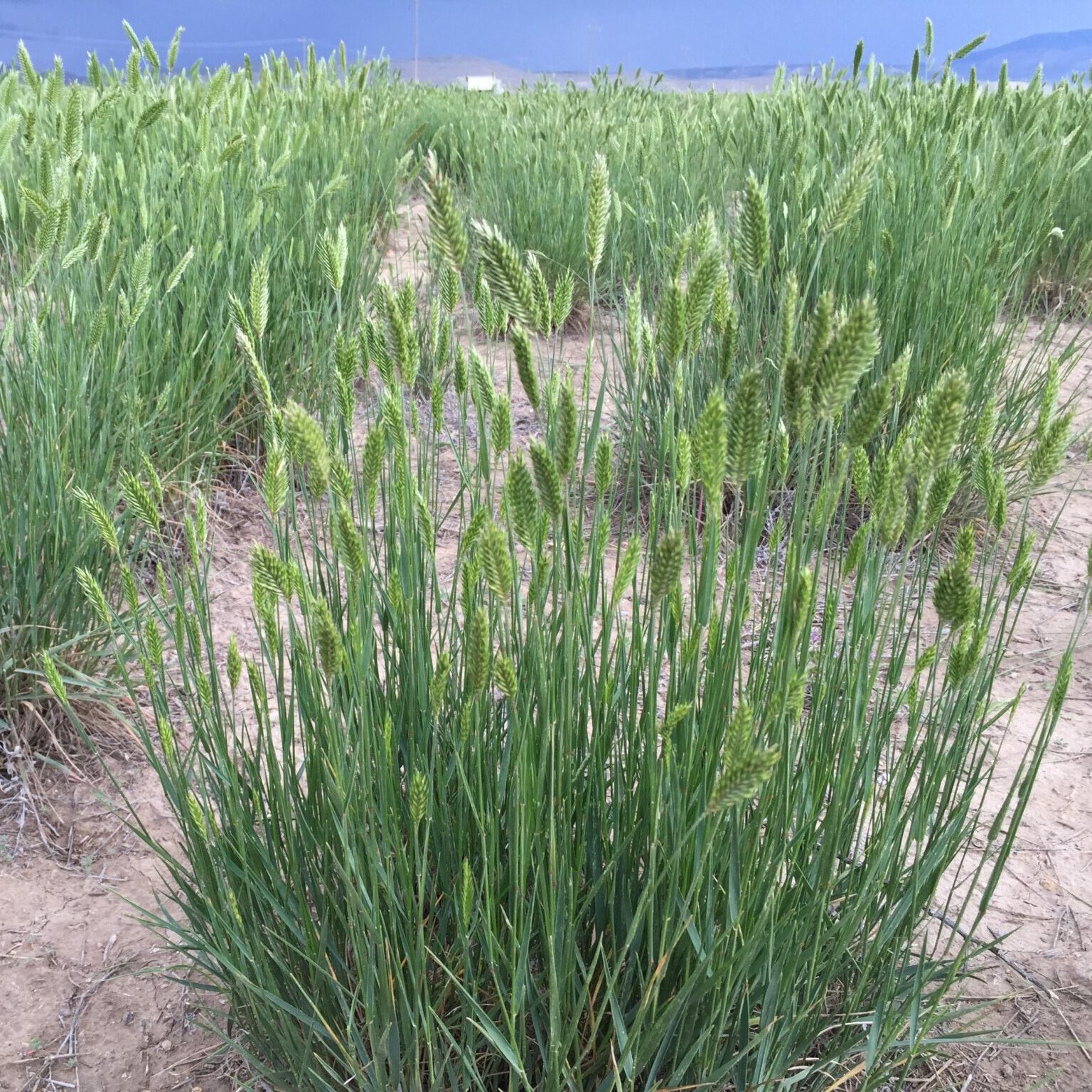
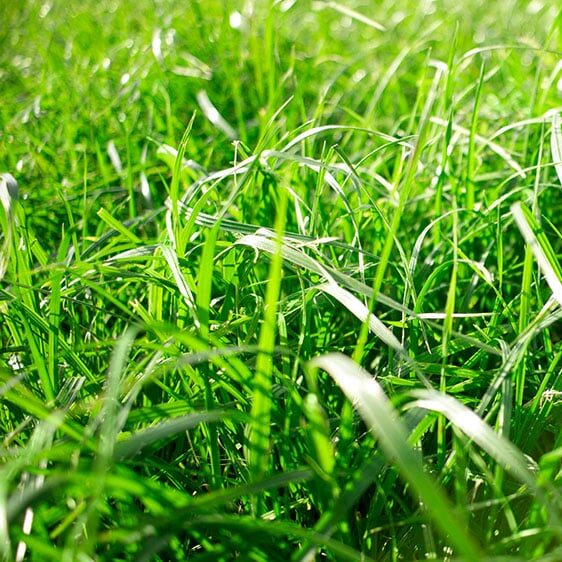
Mathilde Perennial Ryegrass is a tetraploid forage variety created by DLF that combines excellent forage quality with dense growth and good persistence. Suited to pasture, hay, and silage, it is a useful choice for growers looking to improve forage quality in managed grassland and pasture mixtures.
Key Benefits
- Excellent forage quality: Selected for livestock forage production.
- Dense growth: Combines tetraploid forage characteristics with a dense stand.
- Good persistence: Suited to long-term pasture mixtures and temporary grassland.
- Improved winter hardiness: Identified by DLF as a variety strength.
- Versatile forage use: Suitable for pasture, hay, and silage.
Product Description
Mathilde Perennial Ryegrass offers quality forage and dense growth for managed pastures. DLF highlights its combination of forage quality, persistence, and winter hardiness. It is a practical option for pasture mixtures where both feed value and stand density matter.
Perennial ryegrass establishes quickly and produces highly palatable forage. It can also be interseeded into weak pasture stands. In the Intermountain West, it is best suited to irrigated ground with attentive grazing and fertility management.
Adaptation and Growing Conditions
Perennial ryegrass performs best in moderate temperatures with dependable moisture and fertile soils. For western growers, reliable irrigation is important. Prolonged standing water, hot and dry conditions, and severe winters can reduce production or stand survival. Even varieties selected for improved winter hardiness need to be matched to local conditions.
Planting and Management
Seed into a firm, weed-free seedbed, ideally about ¼ inch deep, without exceeding ½ inch. Spring or late-summer planting can work where moisture is available. Allow at least six weeks for establishment before killing frosts.
Manage established pasture with rotational grazing. USDA NRCS recommends beginning grazing at approximately 6–8 inches and removing livestock at about 3 inches to allow regrowth. Maintain irrigation and use soil tests to guide fertilizer applications.
University Trial Performance
Mathilde was included in Ohio State University’s perennial ryegrass trial at South Charleston, planted in April 2005. It produced 6.06 tons of dry matter per acre in 2006, with a reported 7.24-ton total across 2005–2006. Its two-year yield was statistically comparable to Aubisque under those trial conditions. These results demonstrate evaluated forage production, rather than a guaranteed yield for every growing region.
Official References
- DLF Mathilde Variety Information
- DLF Mathilde Technical Sheet
- Ohio State University Forage Trial Results
- USDA NRCS Perennial Ryegrass Plant Guide
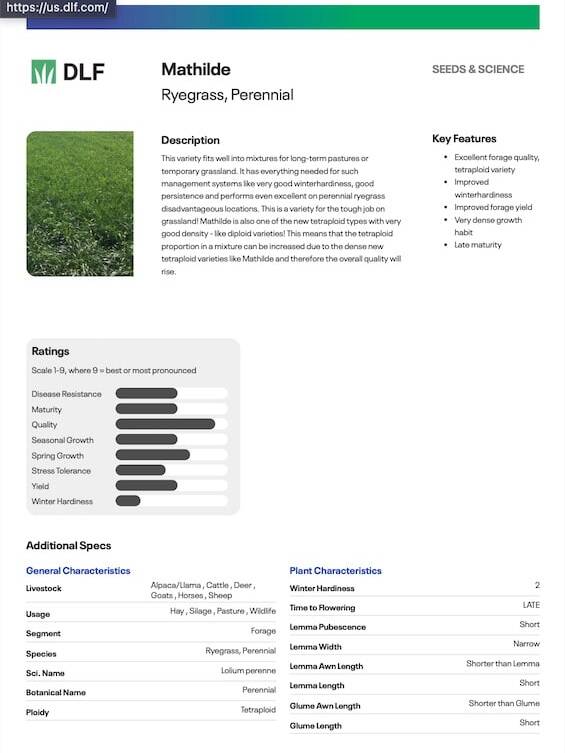
MATHILDE PERENNIAL RYEGRASS
‘Mathilde’ Perennial Ryegrass Spec Sheet
‘Mathilde’ Perennial Ryegrass Spec Sheet