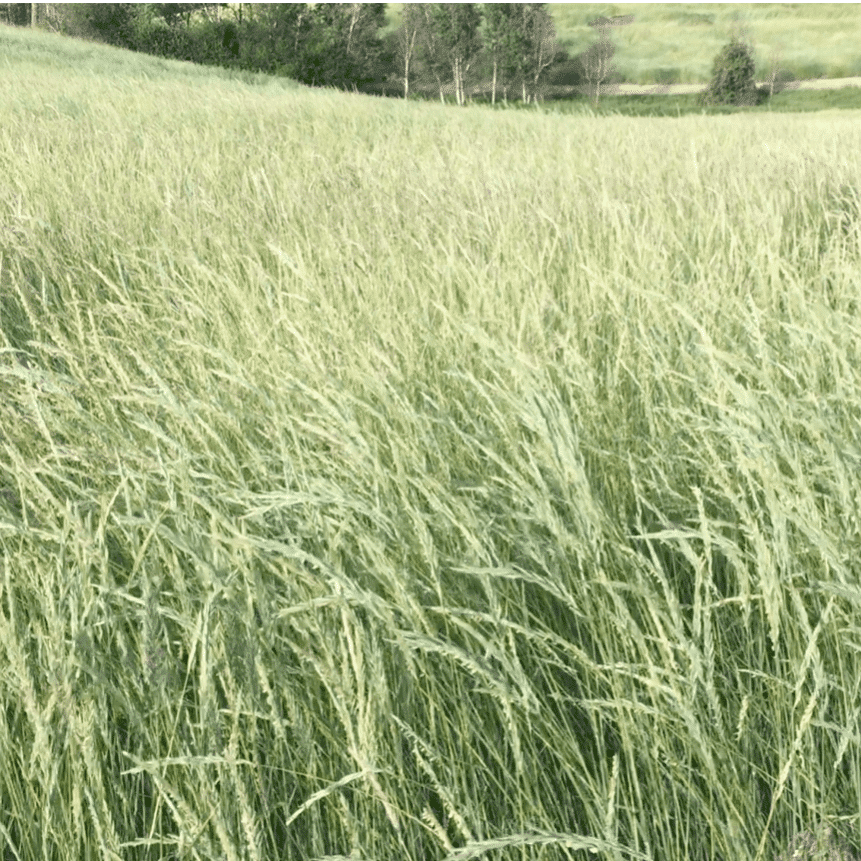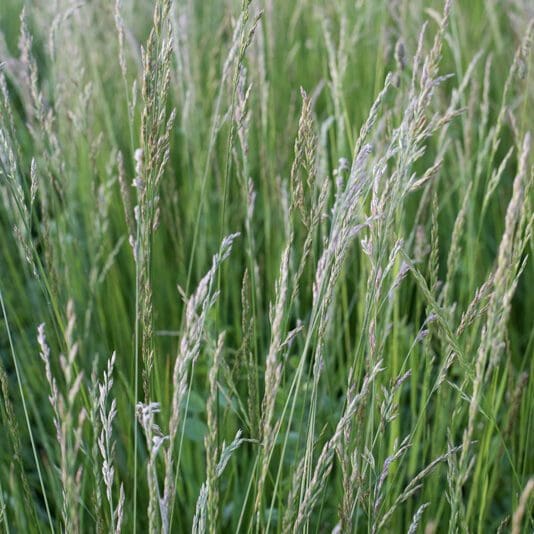






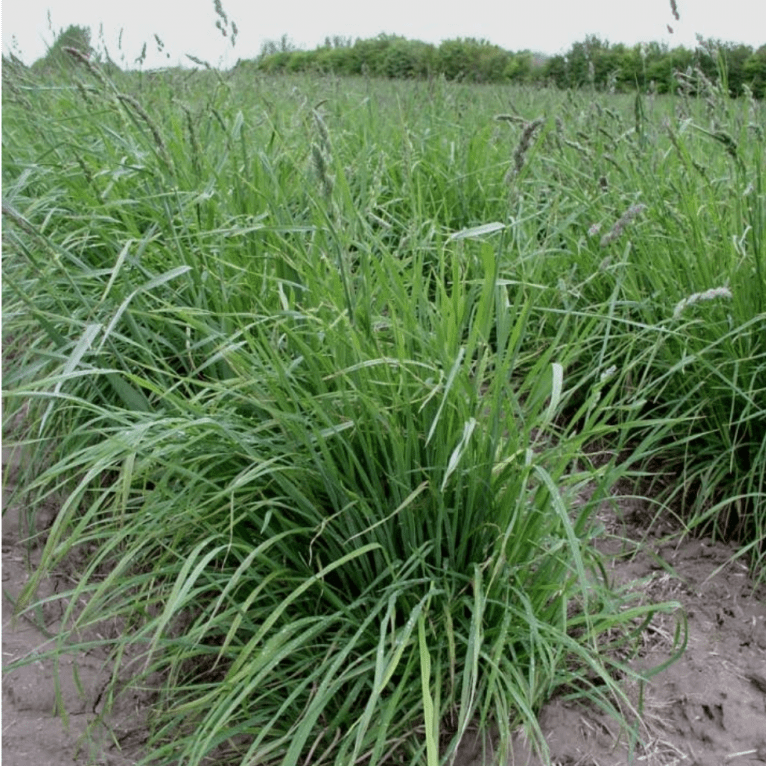
Everlast Orchardgrass is a late-maturing perennial forage grass for hay production, grazing, and mixes. It combines strong forage yield potential with excellent winter survival, stem rust resistance, and enhanced stand persistence. A good choice for growers looking for a productive orchardgrass with more flexibility at harvest.
Key Benefits
- Late maturity: Offers flexibility in harvest timing.
- Strong yield potential: Suited to productive hay and pasture systems.
- Excellent winter survival: Helps maintain established stands through winter.
- Stem rust resistance: Provides protection against an important orchardgrass disease.
- Strong seedling and plant vigor: Supports establishment and continued growth.
- Enhanced stand persistence: Selected for lasting forage production.
- Mix friendly: Well suited to planting with forage legumes.
Product Description
Everlast Orchardgrass gives hay and pasture growers a late-maturing option with the vigor and persistence needed for established forage stands. Its combination of winter survival and stem rust resistance makes it a practical choice where maintaining a productive stand is a priority. Plant it for grazing, hay, or as the grass component of a legume mixture.
Late maturity is one of Everlast’s main advantages. It provides greater flexibility when planning harvests. Excellent seedling and plant vigor, along with strong forage yield potential, round out its strengths for forage production.
Adaptation and Growing Conditions
Orchardgrass is an introduced, cool-season perennial bunchgrass used for pasture, hay, and silage. It produces palatable livestock forage and responds well to rotational grazing. In the western United States, it is adapted to irrigated ground and higher-rainfall areas. Choose moderately to well-drained soils; prolonged saturation and saline soils limit performance. Orchardgrass tolerates partial shade, though extreme summer heat can reduce production.
Planting and Management
Plant into a firm, clean seedbed at a depth of ¼–½ inch. Select planting dates that provide adequate moisture and time for establishment before hot, dry weather. Adjust the seeding rate for your region, planting method, and mixture.
Allow seedlings to establish before grazing. Manage established stands with rotational grazing, avoid close fall grazing, and apply fertilizer according to soil-test results. Adequate moisture and good fertility support forage production and stand longevity.
University Trial Performance
Everlast Orchardgrass has been tested in university forage trials for yield and stand persistence. The University of Kentucky’s Lexington trial, which began in 2021, produced 8.24 tons of dry matter per acre over three production years, with yields statistically comparable to the highest-yielding variety. Everlast also maintained a 99% stand rating until October 2024, demonstrating its value for long-term forage production under the trial’s growing conditions.